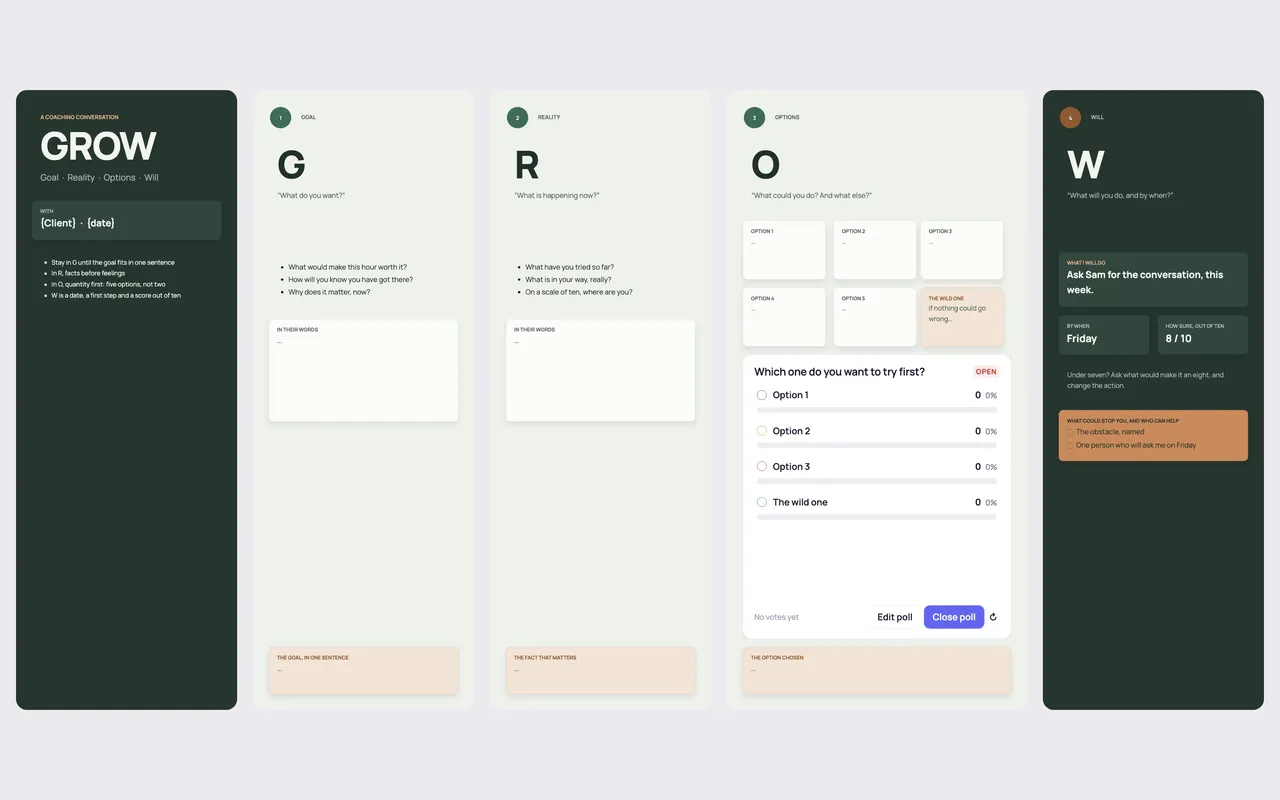
A GROW model template turns the classic coaching framework into one board: the goal in the client's words, the reality with facts before feelings, at least five options, and a will step that ends with an action, a date and a confidence score out of ten. The GROW coaching canvas in Coommit keeps the questions for each step on the board, so you can focus on listening.
What is the GROW model?
GROW stands for Goal, Reality, Options and Will (sometimes Way forward). It is one of the most widely used coaching frameworks because it is simple enough to run in any conversation: define what the client wants, look honestly at where they are, widen the range of possible moves, then commit to one.
The framework is easy to describe and easy to rush. The template adds four rules that keep each step honest: stay in G until the goal fits in one sentence; in R, facts before feelings; in O, quantity first, five options not two; and W is a date, a first step and a score out of ten.
The questions on the board
Goal: "What do you want?" What would make this hour worth it? How will you know you have got there? Why does it matter, now?
Reality: "What is happening now?" What have you tried so far? What is in your way, really? On a scale of ten, where are you?
Options: "What could you do? And what else?" Five option slots, plus "the wild one": if nothing could go wrong, what would you do? A poll asks the client which option they want to try first.
Will: "What will you do, and by when?" What I will do, by when, how sure out of ten, what could stop me and who can help. The board's rule: under seven, ask what would make it an eight, and change the action.
A summary strip at the bottom holds the four answers in one line each: the goal in one sentence, the fact that matters, the option chosen, the action.
How to run a GROW conversation, step by step
- Goal (10 min). Keep asking until the goal fits in one sentence the client agrees with. Write it in their words.
- Reality (15 min). Ask for facts first: what happened, what was tried, what got in the way. Then the score out of ten.
- Options (15 min). Push for five. The first two options are usually the obvious ones; the useful one tends to be the fourth or the wild one.
- Choose. Let the client vote on the option to try first. Voting makes the choice theirs.
- Will (15 min). Action, date, confidence score. If the score is under seven, shrink the action until it is an eight. Name the obstacle and one person who will check in.
Tips for coaches using GROW
- Do not leave the goal too early. A vague goal makes every later step vague.
- Separate facts from the story. "My manager ignored my email" is a fact; "my manager does not respect me" is a story worth exploring later.
- Protect the options step. Clients jump to the first reasonable option. Asking "and what else?" three times is the job.
- Score the commitment. A confidence score under seven predicts the action will not happen.
- Link sessions together. The coaching session template opens the next hour with this commitment.
Running GROW sessions in Coommit
Coommit is a shared workspace where teams meet on video around their docs, designs and websites. The room stays available after the call. The coaching conversation happens on video inside the client's room, the GROW board fills in as the client talks, the options vote runs live, and the commitment is still there at the next session.
Clients join from a link, with no account and no download. After the call, the built-in AI writes a recap with the decisions and next steps. The GROW coaching canvas is available when you create a new room. See Coommit for coaches and consultants and the pricing.