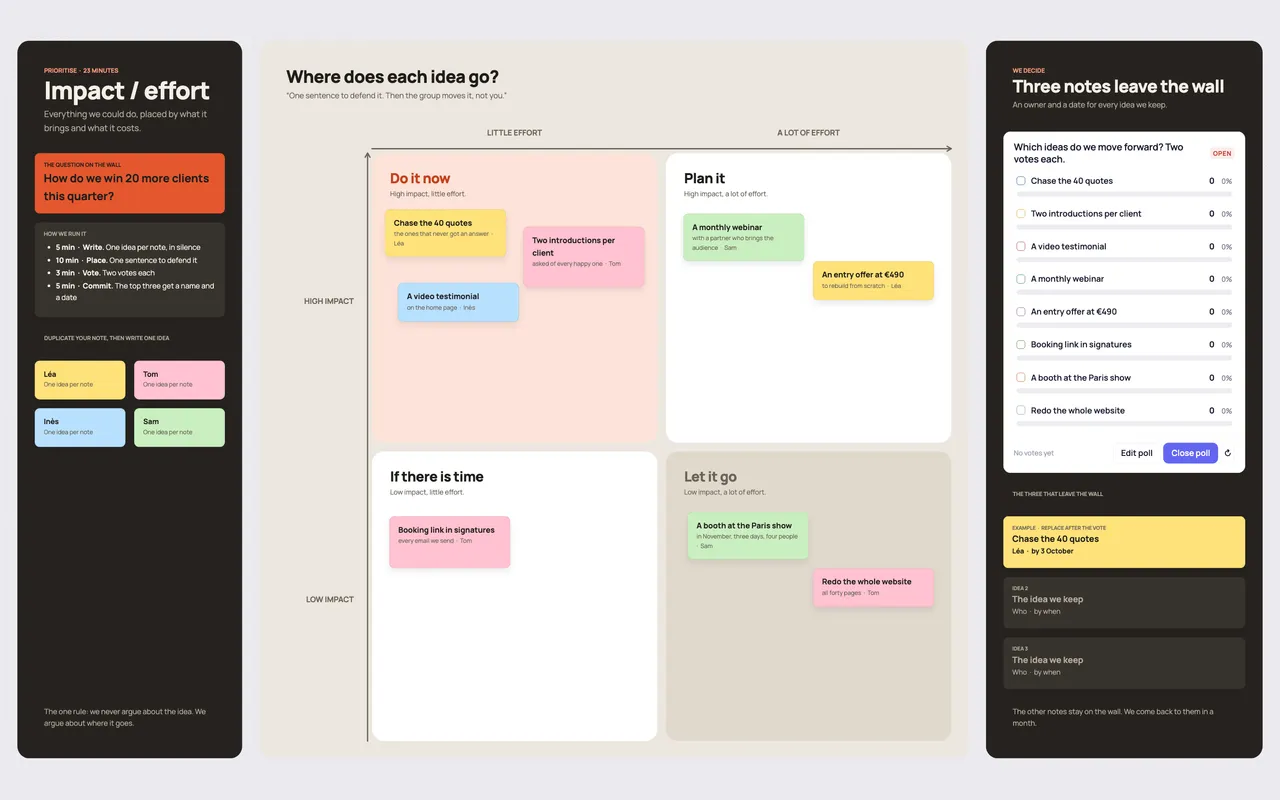
An impact effort matrix template sorts a team's ideas on a 2 x 2 grid by what they bring and what they cost, then turns the best ones into commitments. The Impact / effort template in Coommit runs the whole thing in 23 timed minutes: write in silence, place, vote, and leave with three ideas that each have an owner and a date.
What is an impact effort matrix?
An impact effort matrix is a prioritization grid with two axes: impact (how much an idea moves the goal) and effort (how much it costs to do). The four quadrants give four decisions:
- Do it now: high impact, little effort.
- Plan it: high impact, a lot of effort.
- If there is time: low impact, little effort.
- Let it go: low impact, a lot of effort.
The grid is simple. The hard part is running the session so that the loudest idea does not win, and so that the meeting ends with decisions instead of a nice picture.
What is on the board
- The question on the wall. One question the ideas must answer, for example "How do we win 20 more clients this quarter?"
- How we run it. 5 minutes to write (one idea per note, in silence), 10 to place (one sentence to defend it), 3 to vote (two votes each), 5 to commit (the top three get a name and a date).
- One column of notes per person, so everyone writes before anyone speaks.
- The 2 x 2 grid with its four quadrants, and example ideas already placed: "Chase the 40 quotes that never got an answer" in do it now, "a monthly webinar with a partner" in plan it, "redo the whole website" in let it go.
- The rule: we never argue about the idea. We argue about where it goes.
- A poll with two votes each.
- The three that leave the wall, each with an owner and a date. The other notes stay on the wall, and the team comes back to them in a month.
How to run the session, step by step
- Write the question before anyone joins. A vague question gets vague ideas.
- Five minutes of silent writing. One idea per note, as many notes as people want.
- Ten minutes of placing. Each person places their notes with one sentence of defence; the group can move a note, not argue it.
- Three minutes of voting. Two votes each, anonymous if you want honest results.
- Five minutes to commit. The top three get an owner and a date. Everything else stays visible for next month.
Tips for better prioritization
- Write before you talk. Silent writing puts more ideas on the wall than open discussion, and it keeps quieter people in the game.
- Argue placement, not merit. "Is this really low effort?" is a useful question; "this idea is bad" is not.
- Cap the commitments. Three ideas that ship beat ten that stall.
- Feed the roadmap. What leaves the wall can enter the "now" column of a now-next-later roadmap.
Running it live in Coommit
Coommit is a shared workspace where teams meet on video around their docs, designs and websites. The room stays available after the call. The whole session happens on video inside the room: everyone writes on the board at the same time, the poll counts the votes, and the three commitments are written before the call ends.
After the call, the built-in AI writes a recap with the decisions and the tasks, which you can send to Slack or Notion. For larger groups, breakout groups split the call into smaller teams that write on the same board. The Impact / effort matrix template is available when you create a new room. See Coommit for product teams and the pricing.